Canada, often fondly referred to as a cultural mosaic, is a nation renowned for its rich and diverse heritage.
This country, the second-largest in the world by land area, is home to a population drawn from a broad spectrum of ethnicities and cultures. Today, we will delve into this exquisite blend of traditions that make Canadian culture a unique and vibrant fusion.
Understanding Canada’s culture requires acknowledging its original habitants, the Indigenous peoples. These groups, including the First Nations, Inuit, and Métis, have a profound influence on the country’s cultural fabric. Their contributions range from vibrant art forms, captivating folk tales, to environmental stewardship.
Their artistic legacy is evident in contemporary Canadian culture.
Indigenous art, from intricate beadwork and iconic totem poles, has found its way into mainstream art galleries, music festivals, and public spaces. The mesmerizing rhythms of powwow music and the haunting beauty of Inuit throat singing are intrinsic elements of Canadian folklore that continue to inspire and influence modern music genres.
Simultaneously, the influence of French and British colonial powers has had a significant impact on shaping Canadian culture. This impact is most notable in the bilingual nature of the country, with both English and French recognized as official languages. The province of Quebec, in particular, is a thriving hub of French-Canadian culture, boasting a rich history of literature, music, and gastronomy that is distinctively its own.
Canadian literature, whether in English or French, is a mirror reflecting the country’s multicultural ethos. From Margaret Atwood’s evocative narratives to Gabrielle Roy’s poignant writings, Canadian authors have captured the country’s spirit in words, garnering international acclaim and recognition in the process.
Moreover, Canada’s multicultural policy, implemented in the 1970s, has reinforced its cultural diversity. The policy encourages citizens to embrace their heritage while respecting the cultures of others. This has resulted in cultural fusion evident in various aspects of Canadian life, such as cuisine, festivals, and performing arts.
Take Canadian cuisine as an example.
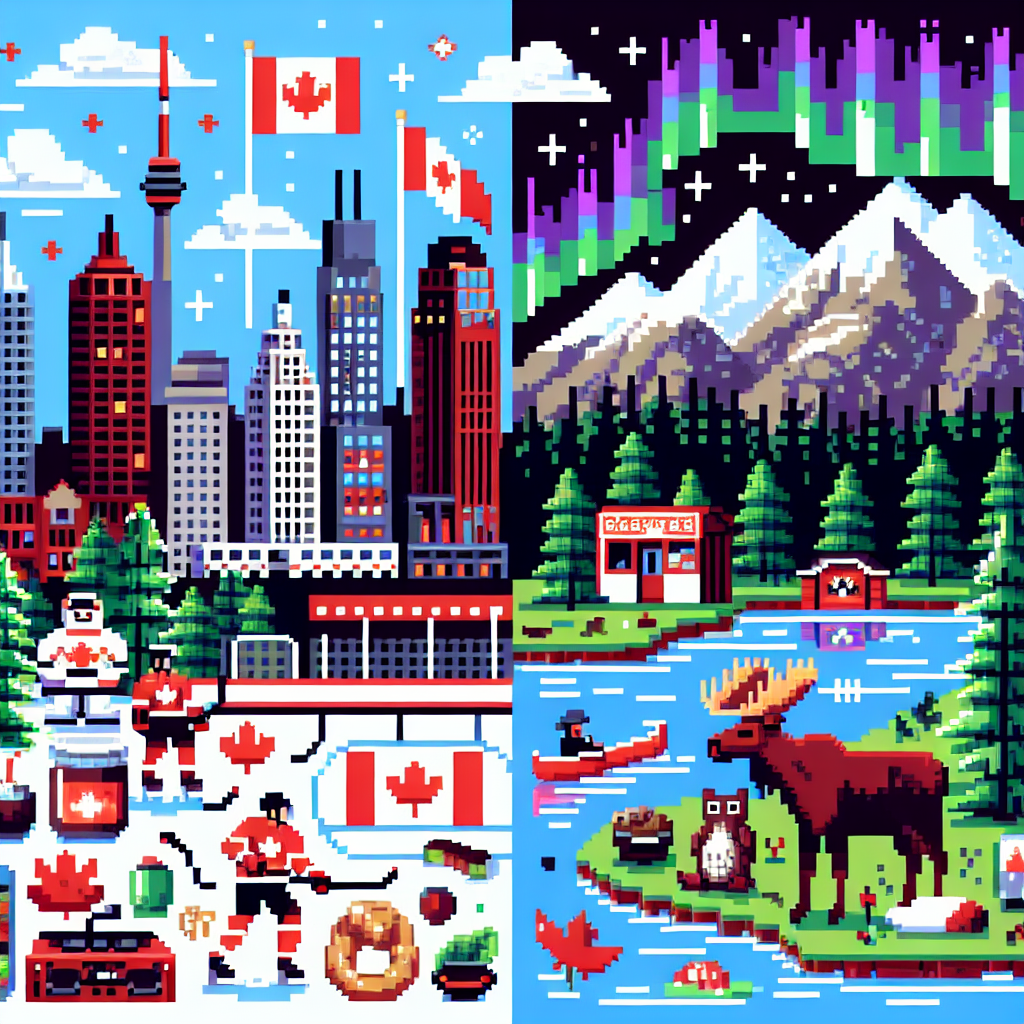
You’ll find a tantalizing mix of dishes, from the Indigenous bannock and Quebec’s poutine to the butter tarts of British origin. The culinary scene is spiced up by contributions from Italian, Chinese, Indian, and Middle Eastern immigrants, making Canada a gastronomic paradise.
Canada’s cultural calendar is equally diverse. Each year, Canadians celebrate a myriad of festivals, from the joyous Chinese New Year parades, vibrant Caribbean Carnival, delightful Oktoberfest, to the colorful Diwali celebrations. These festivities highlight the country’s cultural breadth and symbolize unity in diversity.
Performing arts in Canada are an amalgamation of traditional and modern, local and global.
The Stratford Shakespeare Festival and the Toronto International Film Festival, together with powwows and Inuit drum dancing, all coexist harmoniously, offering a cultural feast to the enthusiasts.
In essence, Canadian culture is a vibrant fusion, a mélange of old and new from diverse corners of the world. It is constantly evolving, shaped by the historical legacy of the Indigenous peoples and colonial powers, and enriched by immigrants who bring their unique heritage to the Canadian mosaic. It’s a culture that signifies openness, acceptance, and diversity, making Canada one of the world’s most culturally rich and exciting nations.